
In this paper, I argue that the central constraint facing contemporary organisations is not a lack of visibility, but a deficiency in their capacity to interpret and respond to emerging risk. Despite significant advances in data collection and analytics, many organisations continue to experience avoidable failures and reactive cycles of intervention.
I critique the limitations of data-centric models, particularly their reliance on retrospective and behaviourally contingent datasets, and introduce the concept of the “grey zone” as the domain in which risk forms prior to formal detection.
Drawing on intelligence theory and organisational studies, I propose an integrated model that combines quantitative and qualitative intelligence within a sense-and-respond framework. I further advance an original contribution by conceptualising the “response gap” as a distinct organisational failure mode and positioning response capability, not visibility, as the primary determinant of effectiveness in complex systems.
Through a generalised case study, I demonstrate how risk emerges, remains undetected, and escalates under current operating models. I conclude that organisational performance is determined less by the volume of information available than by the ability to generate actionable insight and act on it in a timely manner.
Keywords
Organisational intelligence; risk management; qualitative intelligence; sense-and-respond; response gap; regulatory systems; decision-making; complex systems
1. Introduction
Over the past two decades, I have observed a sustained and substantial investment by organisations in systems designed to improve visibility. Advances in data infrastructure, analytics, and reporting have created an unprecedented capacity to observe operational environments, often in real time. This has reinforced a widely held assumption that improved visibility leads to improved decision-making and, by extension, better organisational outcomes.
However, across regulatory, safety-critical, and complex organisational environments, a persistent contradiction remains. Organisations are increasingly capable of detecting and documenting events, yet they continue to experience failures that appear, according to available data, to emerge unexpectedly. These failures often occur in environments that appear stable, compliant, and well-managed.
In this paper, I argue that this contradiction reflects a fundamental misalignment between how organisations conceptualise visibility and how risk actually develops. I propose that the limiting factor is not access to information, but the ability to interpret weak signals and translate insight into timely action. In doing so, I reframe the problem from one of data deficiency to one of intelligence and response capability.
2. Statement of Original Contribution
This paper makes four primary contributions to the literature.
First, I challenge the dominant assumption that visibility is the central determinant of organisational effectiveness. I argue instead that response capability is the critical constraint, shifting analytical focus from observation to action.
Second, I introduce and formalise the concept of the “grey zone” as a distinct domain in which risk forms prior to formal detection. While prior research acknowledges emergent risk, this paper positions the grey zone as a structurally inherent feature of complex systems, characterised by qualitative and pre-indicator conditions.
Third, I conceptualise the “response gap” as a specific organisational failure mode. I define this gap as the breakdown between the detection of signals and the execution of timely intervention, and I position it as a primary driver of risk escalation.
Fourth, I propose an integrated intelligence model that combines quantitative and qualitative intelligence within a sense-and-respond framework. This model extends existing intelligence theory by explicitly linking insight generation to adaptive organisational response.
Together, these contributions advance a shift from data-centric to intelligence-led models of organisational performance.
3. Theoretical Background
I draw on distinctions in information science to clarify the relationship between data, information, and intelligence. Data consists of raw inputs, while information emerges when data is structured to provide meaning. Intelligence, however, involves the analysis and contextualisation of information to support decision-making under conditions of uncertainty. In organisational practice, these distinctions are frequently blurred, resulting in an overemphasis on data collection at the expense of interpretation.
I further draw on complexity theory to explain the nature of risk in contemporary environments. In complex adaptive systems, outcomes emerge through non-linear interactions, feedback loops, and evolving system pressures. Risk does not present as a discrete event but develops over time through patterns that are often only partially visible.
The intelligence cycle provides a framework for translating information into action. However, in many organisations, this cycle is incomplete. While data collection and reporting are well developed, analytical capability and response integration are comparatively weak. This imbalance contributes directly to the persistence of unaddressed risk.
4. The Limits of Quantitative Visibility
Quantitative data remains central to organisational governance, yet its limitations are structural. It is inherently retrospective, capturing events that have already occurred. It is contingent on reporting behaviour, which is shaped by culture, trust, and incentives. It also privileges what is measurable, often excluding critical dimensions such as behaviour, perception, and organisational culture.
These limitations produce a partial view of the system. Organisations gain visibility into observable outcomes, but not into the underlying conditions that give rise to those outcomes. This creates an illusion of control, in which the absence of reported issues is interpreted as evidence of safety.
5. The Grey Zone of Risk Formation
To address this limitation, I introduce the concept of the grey zone as the domain in which risk develops prior to formal detection. This domain is characterised by ambiguity, incomplete information, and the absence of standardised indicators.
Within the grey zone, risk manifests through qualitative signals, including behavioural patterns, cultural dynamics, and contextual pressures. These signals are often subtle and dispersed. Their significance may not be immediately apparent, and they frequently remain unrecognised until they coalesce into more visible outcomes.
The grey zone is not peripheral but central to organisational risk. It represents the space between formal systems and lived experience, where the conditions for failure are established. Engaging with this domain requires capabilities that extend beyond measurement, including interpretation, contextual awareness, and judgement.
6. A Generalised Case Study of Risk Formation and Escalation
To illustrate these dynamics, I present a generalised case study synthesising patterns observed across complex organisational environments.
Consider a large organisation operating in a safety-critical context. It maintains mature reporting systems, robust performance metrics, and regular audit processes. Quantitative indicators suggest stability. Incident rates are low, reporting volumes are consistent, and compliance measures are satisfied.
However, at the operational level, pressures begin to emerge. Resource constraints and productivity demand lead to the gradual adoption of informal workarounds. These practices, initially minor, become normalised over time. Supervisors, balancing competing priorities, do not consistently intervene.
At the same time, reporting behaviour shifts. Minor issues are resolved informally rather than formally recorded. Workers perceive limited value in escalation or potential negative consequences. As a result, reported data remains stable, masking the underlying change in conditions.
These dynamics exist within the grey zone. Signals are present, but they are qualitative, dispersed, and not captured by formal systems. At the organisational level, visibility remains unchanged. There are no quantitative indicators sufficient to trigger intervention.
Over time, system vulnerability increases. The organisation becomes reliant on informal practices that are not designed to manage variability or failure. Eventually, a triggering event occurs. The system, operating with reduced resilience, is unable to absorb the disruption, resulting in a significant incident.
Post-event analysis reveals that the contributing factors were present well before the incident. Patterns of behaviour, cultural pressures, and suppressed reporting are identified as underlying causes. These factors were not invisible, but they were not interpreted or acted upon.
This case illustrates the response gap. The organisation did not fail to collect data. It failed to interpret signals and respond in time.
7. Integrating Quantitative and Qualitative Intelligence
In response to these limitations, I propose an integrated intelligence model that combines quantitative and qualitative sources. Quantitative intelligence enables pattern recognition at scale, while qualitative intelligence provides contextual depth and sensitivity to emerging conditions.
Their integration allows organisations to identify discrepancies between reported data and observed reality. It enhances the ability to interpret weak signals and supports more informed decision-making under uncertainty.
This integration is essential to addressing the response gap, as it provides the foundation for timely and confident intervention.
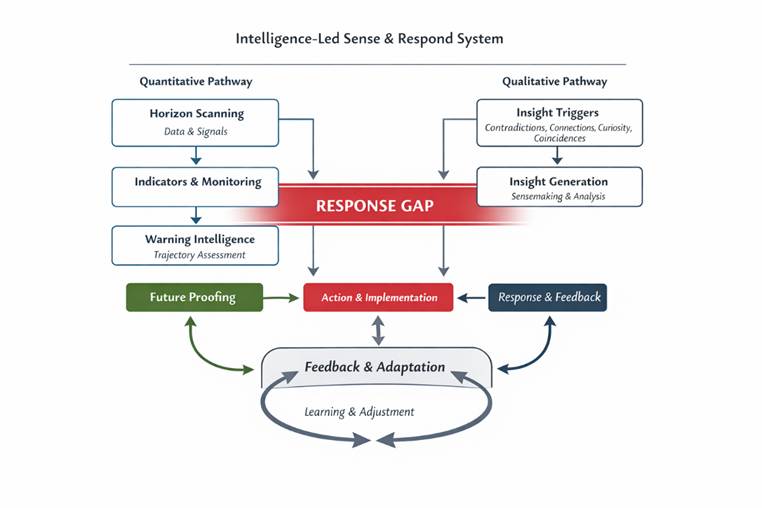
Figure 1- Intelligence -Led Sense & Respond System
8. The Response Gap
The response gap as indicative in Figure 1 represents a central organisational failure mode. I define it as the breakdown between the detection of signals and the execution of action.
This gap arises from structural, cultural, and cognitive factors. Organisations may lack clear authority for action, prioritise quantitative validation over qualitative insight, or delay intervention due to uncertainty. The result is a consistent pattern in which early signals are observed but not acted upon.
As this gap persists, risk escalates. The cost and complexity of intervention increase, and the opportunity for prevention diminishes.
9. Sense-and-Respond as an Operating Model
To address this challenge, I propose the adoption of a sense-and-respond model. This model integrates detection, interpretation, and response into a continuous cycle.
Within this framework, organisations actively identify weak signals, explore potential future states, monitor indicators of change, and develop adaptive responses. Crucially, intelligence is directly connected to decision-making processes, enabling timely action even under conditions of uncertainty.
10. Implications for Organisational Effectiveness
This approach requires a redefinition of organisational effectiveness. Rather than focusing solely on retrospective outcomes, effectiveness should be understood in terms of the capacity to anticipate, interpret, and respond to emerging risk.
This includes valuing qualitative judgement, acting on incomplete information, and prioritising early intervention. It also requires recognising that the absence of data is not necessarily evidence of safety but may itself be a signal requiring investigation.
11. Conclusion
In this paper, I have argued that the central challenge facing contemporary organisations is not visibility, but response. By introducing the concepts of the grey zone and the response gap, and by proposing an integrated intelligence model, I have reframed how organisational risk and performance should be understood.
The generalised case study demonstrates that failures are not typically the result of sudden, unpredictable events, but of gradual processes that remain unaddressed. Signals are present, but they are not interpreted or acted upon.
Ultimately, I conclude that organisational effectiveness in complex systems depends on the ability to convert insight into timely and coordinated action. Organisations that develop this capability will be better positioned to navigate uncertainty, prevent harm, and sustain performance.
 The Red Cross Ledger
Leave a comment